Understanding Heavy Duty Pallet Specifications
The term "heavy duty pallet" is used loosely in the industry, but for operational purposes it should mean a pallet capable of at least 5,000 lb of static load — the load placed on a stationary pallet in racking or floor storage — and at least 4,000 lb of dynamic load — the load on a moving pallet being transported by a forklift or pallet jack. Racking load capacity (the force on the pallet when supported at only two points across its length) is typically the most limiting specification and should always be verified against your specific racking beam span.
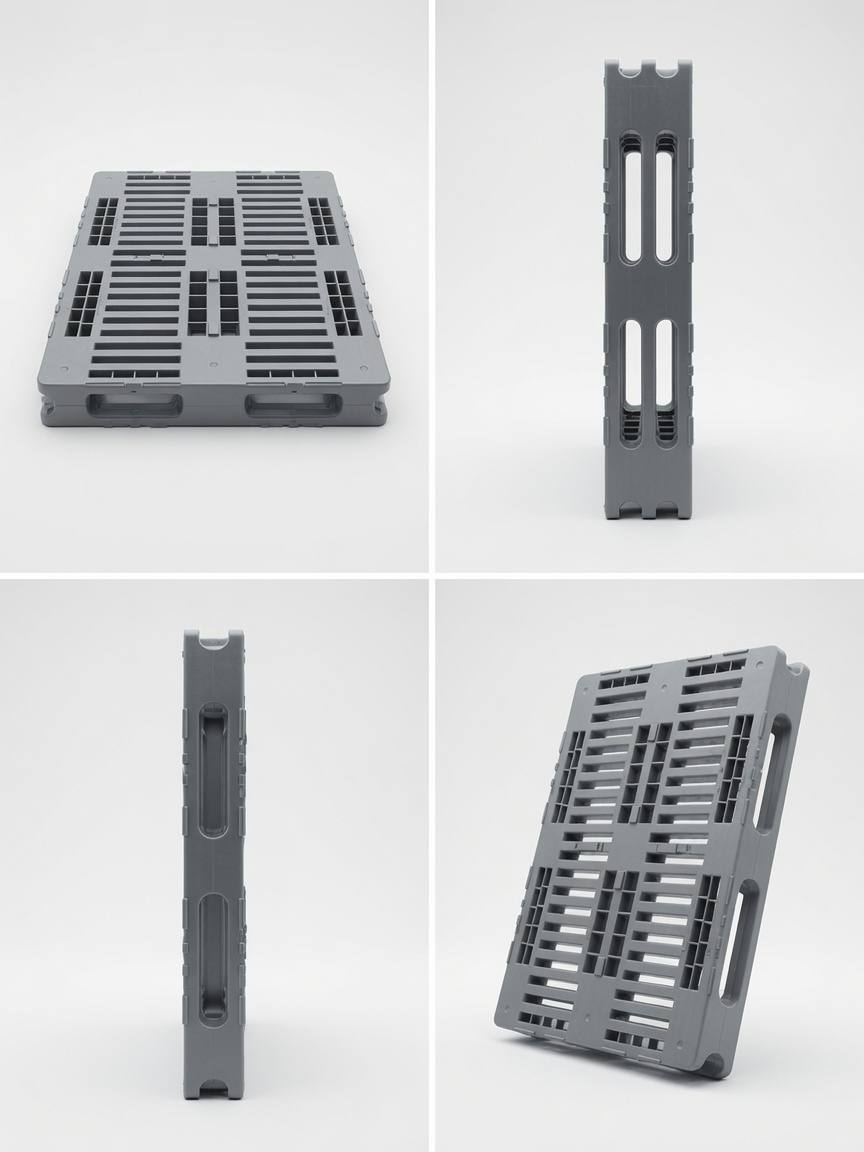
Four-way entry is a prerequisite for any serious industrial pallet. It allows forklifts and pallet jacks to engage the pallet from all four sides, dramatically improving efficiency in busy warehouses, tight spaces, and automated guided vehicle (AGV) systems where the pallet's orientation cannot always be controlled.
Heavy Duty Wood Pallets: Strengths and Limitations
Construction and Grades
Heavy duty wood pallets are typically constructed from hardwood (oak, ash, maple) or dense softwood (Southern Yellow Pine) with thick deck boards (25 mm+), robust stringers or blocks, and heavy-duty nails or screws. Grade A new wood pallets are produced to a consistent specification; Grade B used pallets have been inspected, repaired, and re-graded; and combo/economy pallets are built from mixed reclaimed lumber.
For applications requiring consistent, predictable performance — such as automated racking systems where a warped pallet can cause a jam — Grade A new pallets are the only appropriate choice. For manual handling applications where some variation is acceptable, high-quality Grade B used pallets can offer significant cost savings.
ISPM-15 Compliance for Export
If your supply chain includes international shipments — whether exporting finished goods or importing raw materials — wood pallets must comply with ISPM-15 (International Standards for Phytosanitary Measures No. 15). This regulation requires all solid wood packaging material (SWPM) crossing international borders to be either heat-treated (HT) to 56°C for 30 minutes throughout the wood, or methyl bromide fumigated (MB). Compliant pallets carry a distinctive IPPC mark.
This adds cost and complexity. It also means that used wood pallets of unknown treatment history cannot legally be used in international trade. Plastic pallets are entirely exempt from ISPM-15 requirements, which is one of the strongest arguments for the switch when your operations include significant export volumes.
Repairability
PP plastic pallets eliminate the repair cycle entirely — no broken boards, no splinters, no nail hazards. The upfront cost is higher but the total cost of ownership over a 5-year period consistently favors plastic once repair labor, replacement boards, and product damage claims are factored in.
Heavy Duty Plastic Pallets: Strengths and Limitations
Materials and Construction Methods
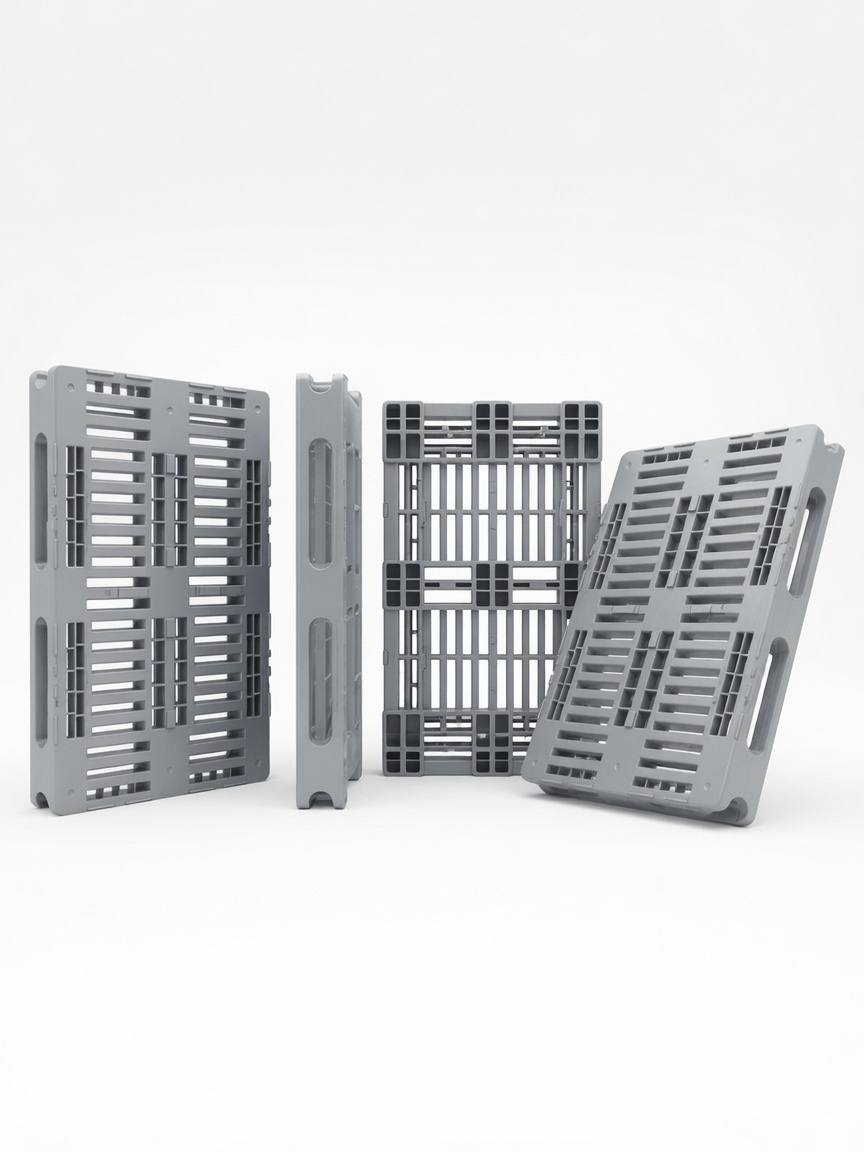
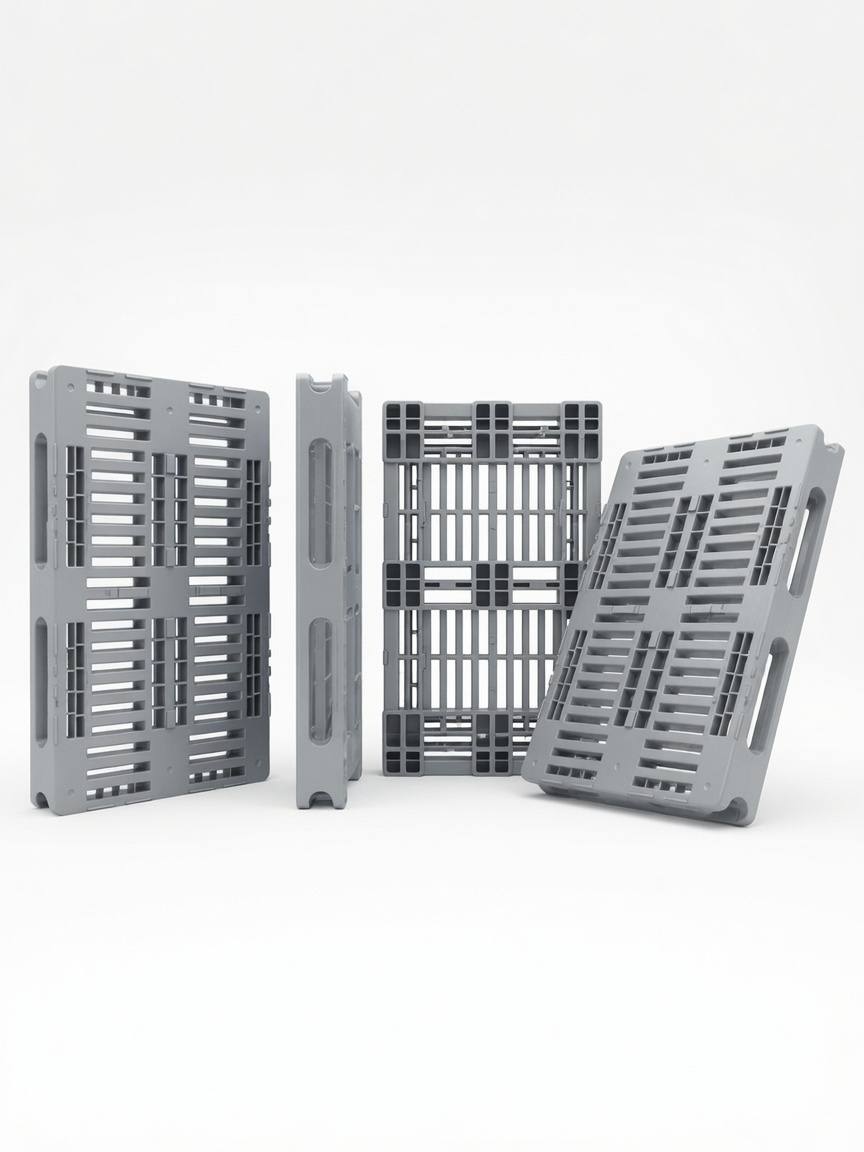
Heavy duty plastic pallets are manufactured using one of three processes: injection molding (for consistent, detailed, cost-effective parts), structural foam molding (for thicker, higher-strength parts with a cellular core), or thermoforming (less common for heavy duty applications). The polymer is typically high-density polyethylene (HDPE), polypropylene (PP), or — for the very highest load ratings — glass-fiber reinforced PP (GFRP). Each construction method and polymer combination has a different load profile, weight, and price point.
Hygiene Advantages in Regulated Industries
In food processing, pharmaceuticals, and cosmetics, pallet hygiene is a regulatory and quality-assurance requirement, not just a preference. Wood pallets are porous: they absorb spilled product, moisture, and cleaning chemicals, creating an environment where molds and bacteria can grow inside the wood where they cannot be reached by surface cleaning. In a GMP (Good Manufacturing Practice) environment, a wood pallet beneath a pallet-load of food product is a recognized contamination risk.
Plastic pallets, by contrast, have a closed-cell, non-porous surface. They can be pressure-washed, sanitized with food-grade chemicals, and returned to service with confidence that no product residue or biological contamination remains from the previous use. This is why FDA-regulated food and beverage facilities, pharmaceutical distribution centers, and clean-room environments overwhelmingly use plastic pallets.
Automated Warehouses and Consistent Dimensions
Automated storage and retrieval systems (AS/RS), conveyors, and automated guided vehicles operate within tight dimensional tolerances. A warped, swollen, or asymmetric wood pallet can cause jams, mis-picks, and system downtime — with significant commercial consequences in a high-throughput automated facility. Plastic pallets are injection-molded to consistent dimensions within ±1 mm, and they do not warp, swell, or shrink with changes in temperature and humidity. For automated facilities, the premium price of plastic pallets is often recovered quickly in reduced downtime and maintenance costs.
Choosing the Right Heavy Duty Pallet: Decision Framework
Neither wood nor plastic is universally superior. The right choice depends on your specific operating conditions:
- Choose plastic if: you operate in food, pharma, or regulated environments; you have significant export volumes; you run automated handling systems; or you are optimizing for 10+ year total cost of ownership.
- Choose heavy duty wood if: you need the lowest possible upfront cost; you have domestic-only, manual-handling logistics; you need on-site repairability; or you are handling one-way shipments where pallet return is not practical.
- Consider a mixed fleet: Many operations use plastic pallets in internal production and distribution loops (where pallets are returned and reused), and wood pallets for one-way domestic shipments where recovery is uneconomical.
Load Ratings Explained
Pallet manufacturers publish three key load ratings: static, dynamic, and rack. Understanding the difference is essential for safe use.
- Static load: The maximum load the pallet can support when sitting stationary on a flat surface, with the load evenly distributed. A 30,000 lb static rating sounds impressive but is rarely the practical constraint.
- Dynamic load: The maximum load during movement — forklift transport, pallet jack operation, conveyor transfer. This is typically 50–60% of the static rating and is the figure that matters for day-to-day handling.
- Rack load (or racking load): The maximum load when the pallet is supported at only two points — the front and back racking beams. This is usually the lowest and most critical figure for racked storage. Always match your racking beam span to the pallet's published racking load rating at that span.